
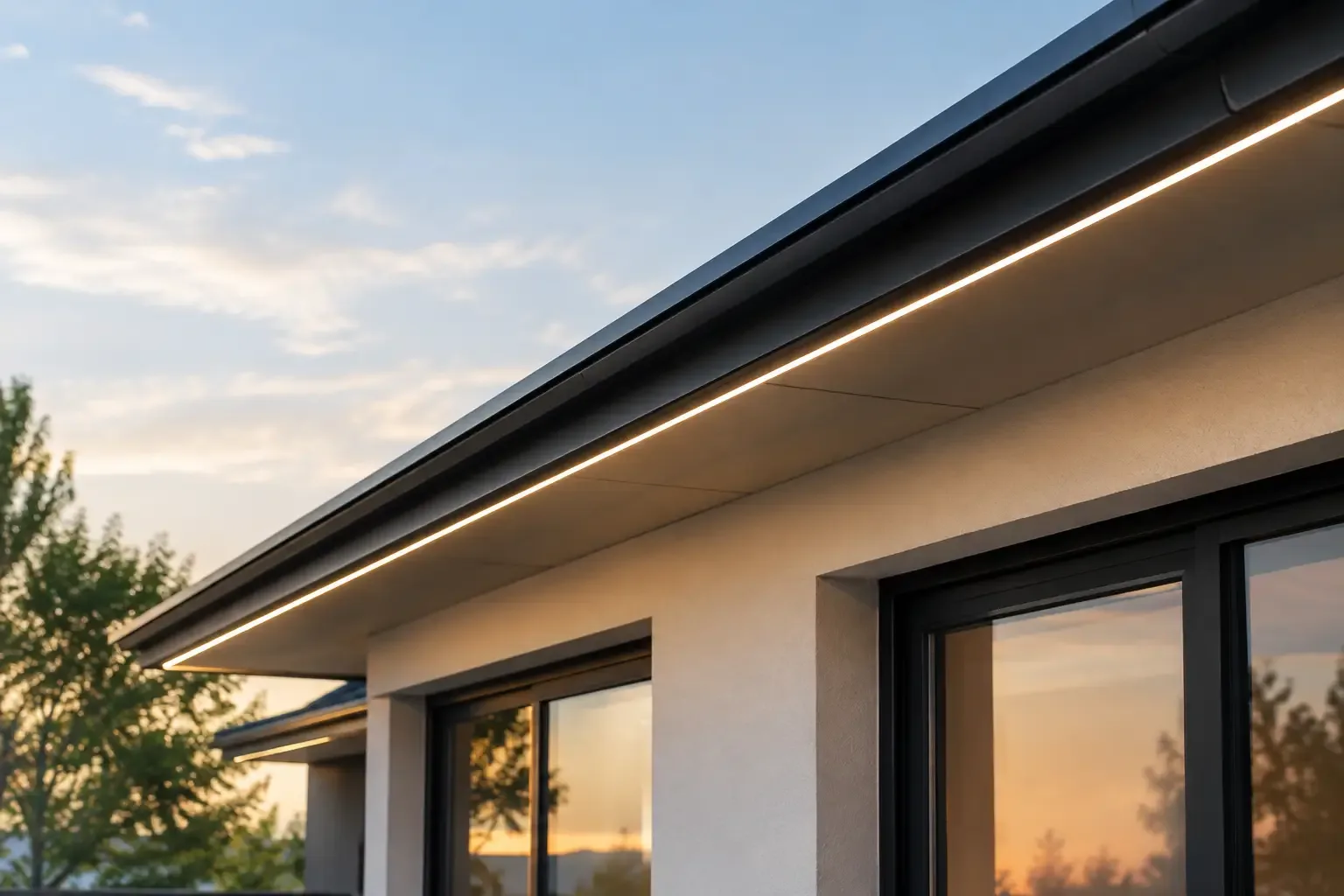
The best permanent exterior lighting should not compete with your home’s architecture during the day. A low profile roofline light track is designed to do the opposite: sit discreetly along the fascia or trim, then bring the roofline to life after dark with refined warm white or full-color light.
For homeowners across Denver and the Colorado Front Range, that balance matters. You want a home that looks polished on an ordinary Tuesday night, not a roofline that appears permanently decorated for a holiday. The track, placement, wiring, and lighting plan all determine whether the finished result feels intentional or distracting.
What Is a Low Profile Roofline Light Track?
A low profile roofline light track is the slim channel that holds and spaces permanent exterior lights along a home’s roofline. Rather than hanging visible strands from clips each season, the lights are installed in a purpose-built track mounted to the fascia, soffit, or another appropriate trim surface.
The track gives each light a consistent position and angle. It also creates a cleaner installation by organizing the wiring and reducing the visual clutter that can come with exposed cords, uneven spacing, and temporary fasteners.
At night, the effect can be subtle or celebratory. A homeowner may choose soft warm white lighting to outline the home for everyday curb appeal, then switch to red and green for Christmas, orange and purple for Halloween, or team colors for game day. During daylight, the goal is simple: the system should recede into the roofline.
Why the Track Matters as Much as the Lights
People often focus on color options or phone controls first. Those features matter, but the track is what makes permanent lighting look like a home upgrade instead of seasonal hardware left behind.
A properly selected track should complement the home’s trim color and roofline details. On many homes, a dark track can blend into dark fascia, while a white or bronze option may make more sense on lighter trim. The correct choice depends on what is visible from the street, where shadows fall, and how the roofline is constructed.
Track profile also affects the viewing angle. A light positioned too far forward can create visible points of light from the street. Positioned thoughtfully, it can cast a smooth, even wash across the architectural edge of the home while keeping the hardware less noticeable.
Clean by Day Starts With Roofline Planning
No two rooflines behave exactly alike. A simple ranch home, a two-story home with multiple gables, and a property with deep soffits each call for a different approach. That is why a quality permanent lighting project begins before anything is mounted.
A professional installer evaluates the visible front elevation, roof pitches, fascia depth, trim material, access points, and the locations where wiring can be routed discreetly. They also look at the portions of the home that matter most to you. Some homeowners want only the front roofline illuminated. Others prefer a complete wrap that includes side elevations, garage peaks, or a backyard entertaining area.
This planning stage is where a low profile roofline light track earns its value. It needs to follow the architecture without drawing attention to itself. Corners, peaks, transitions between roof sections, and short trim runs all need clean handling. A system that looks orderly from the driveway can still appear awkward from across the street if those details are rushed.
Placement Is Not One-Size-Fits-All
The same mounting location will not produce the same result on every house. Fascia boards, soffits, gutters, roof overhangs, and decorative trim can change both daytime visibility and nighttime output.
For example, a track mounted under a deep soffit may be highly discreet, but the light may need to be aimed or spaced differently to create the desired roofline effect. A more exposed fascia installation can provide a crisp outline, though it requires especially careful color matching and alignment. There is no universal “best” placement. The right placement is the one that protects the clean daytime appearance while delivering the lighting effect you want at night.
Colorado weather is another reason details matter. Sun exposure, temperature swings, snow, wind, and roof maintenance all deserve consideration when selecting mounting locations and routing wires. A thoughtful installation respects the home as it is built and leaves practical access where it is needed.
Warm White for Every Night, Color When It Counts
Permanent roofline lighting is often associated with Christmas, but its everyday value comes from flexibility. With app-controlled lighting, your home can have a restrained warm-white look for normal evenings, then become more expressive whenever the occasion calls for it.
Warm white is the setting many homeowners use most often. It adds definition to a home’s exterior, welcomes guests, and gives the property a finished look without creating a festive mood every night. Brightness can be adjusted to suit the neighborhood, the season, or your personal preference. A softer setting may be ideal for weeknights, while a brighter look can make sense for a gathering or special event.
Color scenes are there when you want them. They can support holiday traditions, birthdays, graduations, patriotic weekends, and family celebrations without requiring ladders, tangled strands, or another trip to the storage room. Instead of installing and removing decorations multiple times a year, you are working from one integrated system.
Control Should Feel Effortless
A permanent lighting system should not require technical knowledge to enjoy. Through the app, homeowners can generally choose colors, adjust brightness, set timers, schedule scenes, and organize different sections of the home into zones.
Zones are especially useful on larger or more complex rooflines. You might keep the front elevation warm white while setting a backyard patio area to a different color for a party. Or you may light only the garage and front gable on an average evening, then activate the whole home for a holiday.
Schedules remove another small but meaningful chore. Set warm white lighting to come on at dusk, turn off at a preferred hour, or run a holiday scene during specific dates. The best setup is the one that fits naturally into how you use your home, rather than asking you to manage it constantly.
What to Expect From Professional Installation
A permanent lighting installation is more than attaching a track and connecting power. The quality of the finished appearance depends on careful layout, secure mounting, clean wire management, and controller placement that works for the home.
At Firefly Exterior Lighting, the process begins with the property itself. Roofline photos, address details, and a discussion of your goals help shape a tailored design. A visualizer preview can help you see how lighting may look on your own home before installation, which is useful when deciding how much of the roofline to include.
On installation day, the crew measures and plans each run, mounts the track in the selected locations, routes wiring as discreetly as possible, and connects the system to its controller and power source. After testing, homeowners are shown how to use the app and create the scenes, schedules, brightness settings, and zones that suit their household.
The exact installation timeline and configuration depend on the size and complexity of the home. Long rooflines, multiple peaks, difficult access, and extensive side or rear coverage can add planning and labor. That is not a drawback. It is the difference between forcing a standard kit onto a custom home and designing a system around the property.
Questions to Ask Before Choosing a System
Before moving forward, ask how visible the track will be during the day and whether its color can be selected to complement your trim. Ask where the controller will be placed, how wires will be routed, and what portions of the roofline are included in the proposal.
It is also worth discussing app features in practical terms. Can you use warm white for nightly lighting? Can you set schedules? Can separate roofline sections be controlled as zones? Understanding how you will use the system after installation is more valuable than comparing a long list of features you may never touch.
Finally, review warranty and support details before the work begins. Permanent lighting is a long-term addition to your home, so clear expectations about equipment, installation, and service matter.
A low profile roofline light track is not the flashy part of a permanent lighting system, but it is one of the reasons the finished home looks so composed. When the track is carefully matched, properly placed, and paired with thoughtful controls, your roofline stays clean by day and becomes unforgettable by night - on your schedule, for every season.