
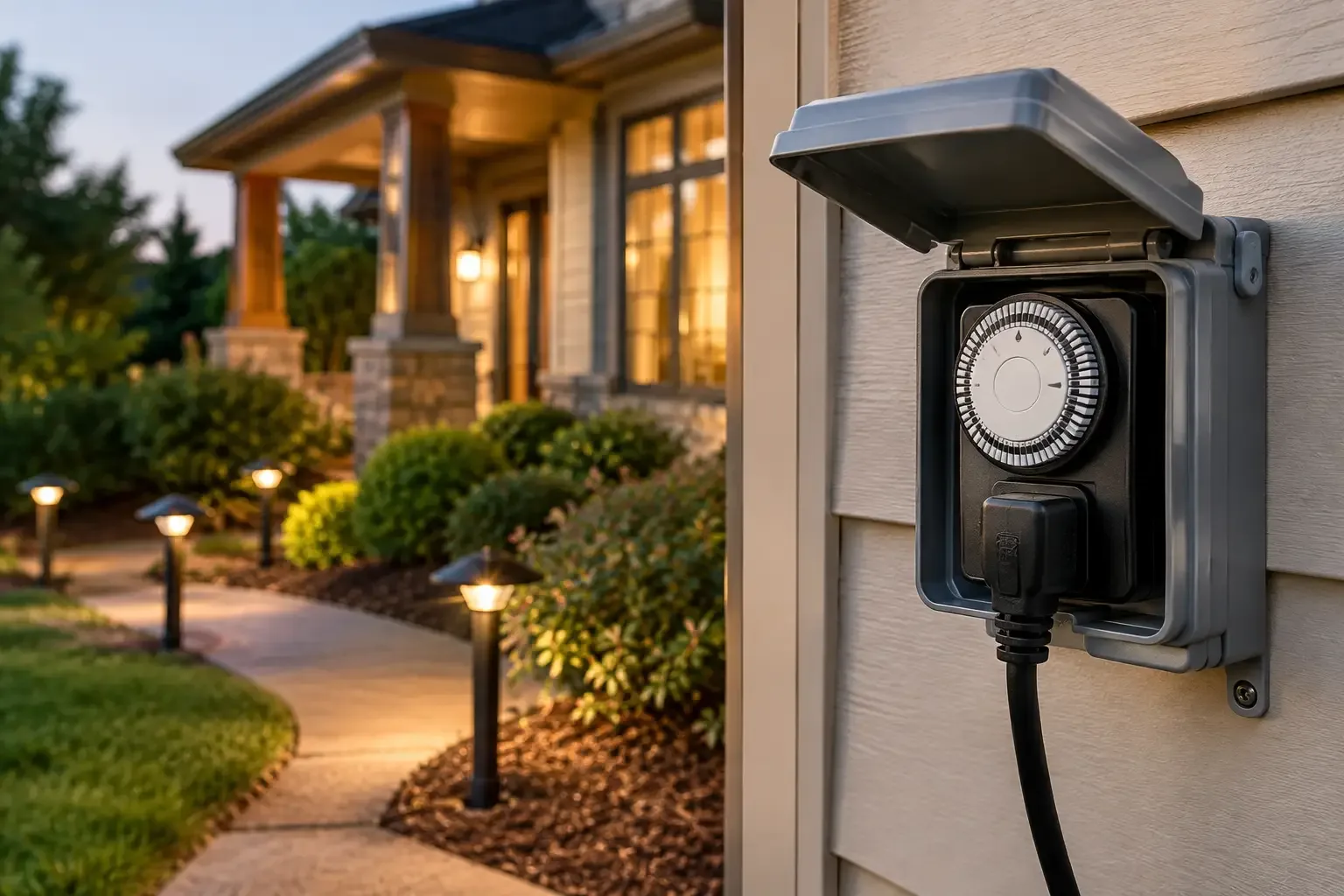
A well-set outdoor lighting schedule timer changes the way a home feels after sunset. Instead of walking outside to switch lights on, leaving them running until morning, or climbing a ladder every December, your roofline can come to life at the right time with a polished, intentional look.
For permanent exterior lighting, scheduling is more than a convenience feature. It is what makes everyday warm-white lighting feel like part of your home’s architecture while keeping color scenes ready for the moments you want to celebrate. The goal is not to have every light on all night. It is to create a rhythm that fits your household, your street, and the season.
What an outdoor lighting schedule timer actually does
An outdoor lighting schedule timer tells your permanent lighting system when to turn on, what scene to display, how bright it should be, and when to turn off. With app-controlled roofline lighting, that schedule can be much more refined than a basic plug-in timer.
A homeowner may set warm white lighting to illuminate the front roofline from dusk until bedtime on weeknights. For a Saturday gathering, the same system can shift to a richer color scene for a few hours, then return to its normal setting automatically. During the holidays, a Christmas scene can run nightly without replacing the everyday schedule permanently.
This control matters because exterior lighting has different jobs at different times. A warm, lower-brightness scene can add curb appeal and make the home feel welcoming. A full-color scene can make a birthday, game day, or holiday feel unmistakably special. Schedules let both uses coexist without constant adjustments.
Start with the home you want to see every night
The best schedule begins with your ordinary Tuesday evening, not the biggest holiday of the year. Think about when your household arrives home, when neighbors are likely to see the house, and when you prefer the exterior to quiet down for the night.
For many Front Range homeowners, a warm-white scene from dusk until 10:00 or 11:00 p.m. feels right. It highlights the roofline without making the home appear overly bright or commercial. If your family often comes home later, or you enjoy spending time outdoors in the evening, extending that window may make sense.
Brightness deserves just as much attention as timing. A clean architectural effect usually comes from restraint. The right setting should define the lines of the house and complement porch, landscape, and entry lighting rather than compete with them. Homes on darker lots may use a lower setting than homes on busy, well-lit streets.
Seasonal sunset changes are another reason app-based scheduling is useful. A fixed 6:00 p.m. start may work in December but turn on too late in summer. Where the system supports it, a dusk-to-dawn or sunset-based trigger keeps the lighting aligned with the actual evening rather than the clock.
Build in an off time that respects the neighborhood
Leaving lights on overnight is not automatically wrong, but it is worth choosing intentionally. Some homeowners prefer a short overnight period for a sense of presence while traveling. Others want lights off by bedtime to preserve a darker, calmer streetscape.
There is no universal rule. The right off time depends on your neighborhood, the visibility of your roofline, and how much light already exists around the property. A thoughtfully designed system gives you the flexibility to choose without sacrificing the daytime-clean, nighttime-finished look that made permanent lighting appealing in the first place.
Use schedules for daily lighting, scenes for occasions
A common mistake is treating every color scene as a permanent setting. The result can feel busy, especially when a home is lit in bold colors night after night. A better approach is to make warm white your dependable default and use color with a purpose.
Your regular schedule might run a soft warm-white scene each evening. Then, add temporary schedules for the occasions that deserve more energy: red, white, and blue around patriotic holidays; team colors on game day; orange and purple for Halloween; or a favorite palette for a graduation party.
Most app-controlled systems allow schedules to be copied, edited, paused, or removed. That means a holiday scene does not need to disrupt your regular routine. You can schedule it for specific dates and hours, then allow the system to return to warm white when the celebration ends.
This is one of the practical advantages of permanent lighting over temporary strands. There is no separate installation to plan, no tangled bins to retrieve, and no need to settle for one seasonal look. The hardware stays discreetly in place. The experience changes when you choose.
Set zones around the way you use your property
If your exterior lighting system includes zones, scheduling becomes even more useful. A front roofline, side elevation, patio line, or backyard entertaining area may not need the same scene or timing.
For example, the front of the home can follow a dependable curb-appeal schedule while a patio zone remains off until you are entertaining. On a summer evening, you might light the backyard in a subtle warm white until guests leave, even if the front elevation has already shut down. During a party, color can be reserved for the entertaining space while the front remains refined.
Zone planning should start during the design process, not after installation. The roofline layout, controller placement, wiring paths, and how you expect to use each part of the property all affect what is possible. At Firefly Exterior Lighting, that planning is part of creating a system that feels tailored to the home rather than added on afterward.
A simple schedule to begin with
If you are setting up a new system, start simple and live with it for a week. A useful baseline is warm white at sunset, a moderate brightness level, and an automatic shutoff before or around bedtime. Make small adjustments from there.
Pay attention to the view as you pull into the driveway, the light visible from inside the home, and how the effect reads from across the street. A scene that looks understated from the sidewalk may feel brighter from an upstairs bedroom. Your app gives you control, but the best final settings come from seeing the lighting in the context of your real evening routine.
For special scenes, schedule a clear start and end time rather than relying on memory. If a game starts at 6:30 p.m., set the team colors to begin a little before guests arrive and end at a reasonable hour. If you are away for a holiday weekend, a few scheduled evenings can make the home look cared for without keeping the system active all night.
Avoid these scheduling frustrations
Most schedule issues come down to a few simple settings. First, confirm the controller’s time zone and whether daylight saving time updates automatically. A schedule set correctly in the app can still run an hour off if the controller clock is not aligned.
Second, look for overlapping schedules. If a nightly warm-white scene and a holiday color scene are both scheduled at 7:00 p.m., the system needs a clear priority. Depending on the app, the most recently triggered scene may take over, or a schedule may override another. Test this before an event instead of discovering the conflict when guests arrive.
Third, consider what happens after a temporary schedule ends. Some systems return to the previous scene, while others turn off or hold the last active setting. Knowing that behavior makes it easier to create a holiday schedule that transitions cleanly back to your everyday lighting.
Finally, save favorite scenes before building a calendar around them. Give them straightforward names such as “Nightly Warm White,” “Halloween,” or “Patio Evening.” Clear names make it easier for every member of the household to make a quick change without guessing which preset is which.
The timer should support the design, not run the show
An outdoor lighting schedule timer is most effective when it disappears into your routine. You should not have to think about whether the roofline is lit for a normal evening, whether the holiday colors will come on, or whether everything will shut down at the end of the night.
That ease starts with a clean installation and continues with settings that reflect how you actually live. Begin with one elegant nightly schedule, add color scenes when the occasion calls for them, and adjust over time. The result is a home that looks considered after dark, without turning exterior lighting into another item on your to-do list.