
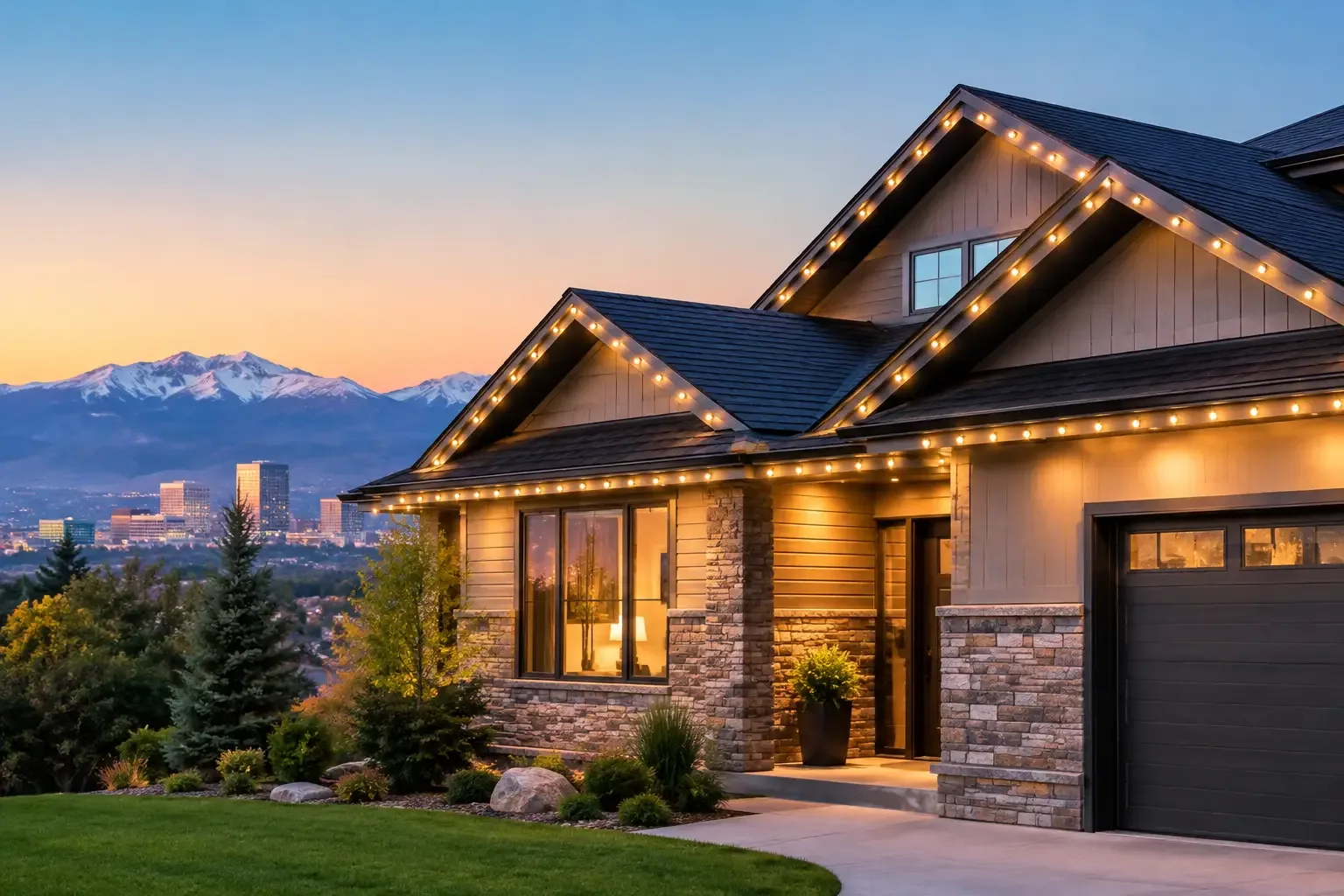
A Denver roofline has a lot to contend with: bright sun, sudden temperature swings, spring hail, snow-packed evenings, and the visual standard set by well-kept neighborhoods from Highlands Ranch to Arvada. That is why permanent Christmas lights Denver homeowners choose should be more than a strand of holiday bulbs left up all year. They should feel like a considered part of the home - clean by day, purposeful after dark, and easy to control when the moment calls for color.
For many homeowners, the original motivation is simple: never hang holiday lights again. No ladder, no tangled bins, no burned-out section discovered after the first snow. The value becomes clearer after Christmas, though. A thoughtfully designed permanent lighting system can give your home an understated warm-white outline on an ordinary evening, then shift to full-color scenes for Halloween, a graduation party, a Broncos game, or a neighborhood gathering.
Why Permanent Christmas Lights Make Sense in Denver
Temporary holiday lights ask you to repeat the same inconvenient routine every year: buy or repair strands, test connections, climb the roofline, manage extension cords, then take everything down and find room to store it. For a home with a prominent gable, multiple peaks, or long front elevation, the job is not just tedious. It can be difficult to do safely and neatly.
Permanent lighting changes the ownership experience. The fixtures are installed in a discreet track along selected rooflines or trim, with wiring planned around the architecture rather than draped across it. When the system is off, the goal is to preserve the look of the home. When it is on, every line of light appears intentional.
That distinction matters in Denver, where exterior improvements tend to be visible year-round. A permanent system is not only for a December display. It is an architectural lighting feature with a holiday setting built in.
The Difference Is in the Daytime Finish
Not every permanent lighting installation produces the same result. The equipment matters, but so does the planning behind it. A polished system begins with the home itself: roof pitch, fascia color, gutter layout, peaks, dormers, entry details, power access, and the sightlines from the street.
A professional installer should determine where a track can sit discreetly and how wiring can travel without drawing attention. On some homes, the front roofline is the natural focus. On others, wrapping a garage return, a gable, or an entryway creates a more balanced nighttime presentation. More coverage is not automatically better. The right coverage is the coverage that complements the architecture.
This is also where a visualizer or roofline preview can be useful. Seeing a proposed layout on an image of your own home helps answer a question that is hard to resolve from a product photo: will this look refined on my house?
Warm White for Ordinary Nights, Color for Big Moments
The strongest reason to install permanent lighting is versatility. A warm-white scene can add a welcoming glow for evenings at home without making the house feel decorated for a holiday. Lower brightness settings are often best for everyday use, particularly in neighborhoods where homeowners value a quiet, finished look.
When the calendar changes, the same roofline can take on an entirely different personality. Red and green for Christmas, orange and purple for Halloween, red, white, and blue for patriotic holidays, or team colors for game day are all available without changing a single bulb. Because the lighting is app-controlled, homeowners can save favorite scenes rather than rebuilding them each time.
The trade-off is worth considering: highly animated patterns and maximum brightness can be fun for a party, but they are not the right choice for every night or every street. The most attractive systems make it easy to move between celebratory color and restrained architectural lighting.
What a Thoughtful Installation Process Looks Like
Permanent Christmas lights are a custom exterior project, not a one-size-fits-all purchase. A useful estimate typically starts with the address, roofline photos, and a conversation about which areas of the home you want illuminated. A front-facing design may be enough for curb appeal, while a corner lot or home that hosts outdoor gatherings may benefit from additional sides or patio-adjacent lines.
After the layout is approved, installation focuses on clean placement and controlled wiring routes. The system needs a practical controller location and a dependable power plan, but those functional choices should not overwhelm the appearance of the home. The final result should look integrated, not added on.
Once installed, the homeowner should be shown how to use the app. That includes choosing scenes, adjusting brightness, grouping zones, setting timers, and scheduling the lights around a routine. Firefly Exterior Lighting approaches this as part of the finished installation, because a beautiful system is only as convenient as it is to operate.
Zones Make a Home Easier to Light Well
Zones are particularly helpful on larger or more detailed homes. They allow different roofline sections to operate independently. You may want the front gables in warm white every evening while the garage line remains off, or you may prefer a colorful entry display for a birthday without lighting every edge of the house.
Zoning also gives you more control over balance. Instead of treating the home as one long string of lights, you can tailor the effect to how the house is actually seen from the street and from outdoor living areas.
Denver Conditions and Long-Term Expectations
Colorado weather is a practical consideration, not a reason to avoid permanent lighting. The key is using equipment intended for exterior conditions and having it installed with care. Roofline tracks, connections, controller placement, and wire routing all deserve attention because the system will live outside through sun, cold, wind, rain, and snow.
Homeowners should also ask direct questions before selecting an installer. What does the proposal include? Which rooflines are covered? Where will the controller be placed? How will the wiring be routed? What are the warranty terms for equipment and labor? How is support handled if a section needs attention later? Clear answers are more valuable than broad promises.
Cost will vary with the length and complexity of the roofline, access, the number of zones, and the design scope. A simple single-story front elevation generally requires a different investment than a multi-level home with peaks, returns, and lighting on several sides. Financing may be available for some projects, but the best starting point is a detailed, property-specific proposal rather than a generic per-foot assumption.
Common Questions About Permanent Roofline Lighting
Will the lights look visible during the day?
A well-planned system is designed for a low-profile daytime appearance. Track color, mounting position, and wiring paths all affect what is visible from the street. The goal is not to make the equipment disappear from inches away, but to keep it unobtrusive in the context that matters: your home's normal daytime curb appeal.
Can I use them only for Christmas?
Yes, but most homeowners find they use them more often than expected. A soft warm-white setting can be appropriate throughout the year, while color scenes make smaller celebrations feel more personal without the effort of setting up temporary decorations.
Do I need to manage the lights every night?
No. Timers and schedules can automate a regular evening routine, and the app lets you make changes when you want to. You can set a daily warm-white schedule, then switch to a holiday scene for a weekend and return to the usual setting afterward.
Is brighter always better?
Not necessarily. Brightness should suit the home, the season, and the surrounding neighborhood. A lower setting often looks more architectural and comfortable for daily use, while a brighter scene can create impact for holidays or events.
A permanent lighting system should make your home easier to enjoy, not give you another exterior task to manage. Start with the rooflines that matter most to you, choose a design that looks right in daylight, and let the color be there when the occasion deserves it.