
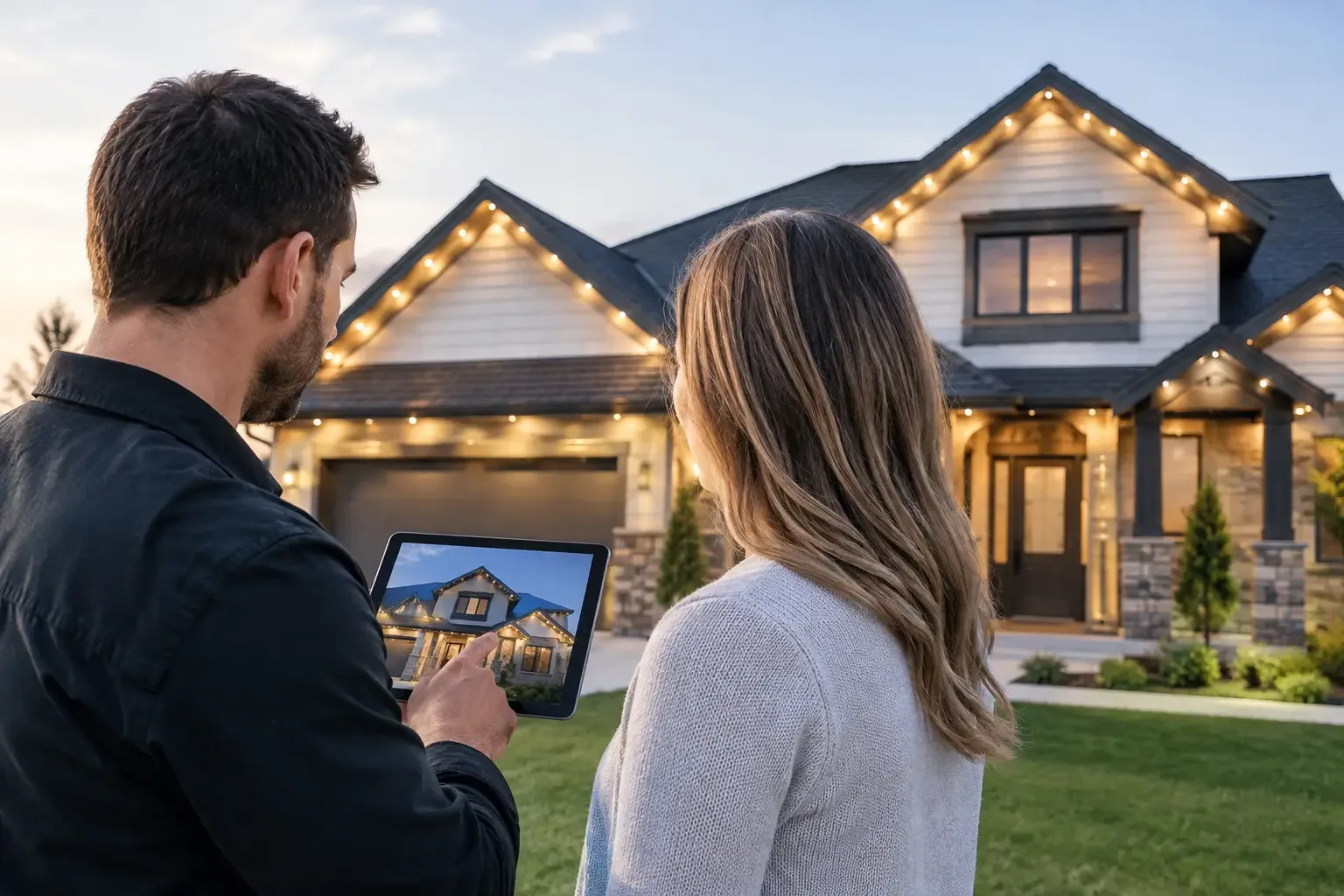
A roofline lighting estimate request is more than a formality. It is the first step in designing a system that looks intentional on your home, stays discreet in daylight, and gives you warm architectural light or full-color celebration scenes from your phone at night.
For many homeowners, the goal is simple: never climb a ladder to hang holiday lights again. The planning behind that result is more detailed. Your roofline, trim profile, power access, wiring routes, and preferred lighting zones all affect the final design. A thoughtful estimate turns those details into a clear plan before installation day.
What to Include in a Roofline Lighting Estimate Request
The most useful estimate starts with a clear view of your property. Your street address allows the installer to understand the home’s setting and evaluate the visible roofline. Recent photos are equally valuable, especially a straight-on front elevation plus angled views that show gables, garage lines, dormers, and side returns.
Photos do not need to be professionally taken. A few daylight images from across the street or driveway usually provide a strong starting point. If there are trees, landscaping, awnings, solar equipment, or architectural features that could affect access or visibility, include those as well.
It also helps to share what you want the lighting to do. Some homeowners want a refined warm-white outline every evening, with color reserved for holidays and special occasions. Others want highly visible color along the front-facing roofline for Halloween, game days, birthdays, and Christmas. Both approaches can work beautifully, but they lead to different conversations about zones, brightness, and coverage.
A strong request may include:
- Your address and the best way to reach you
- Daylight photos of the front and any rooflines you want illuminated
- Whether you prefer warm white, full color, or both
- Areas you would like included, such as the garage, front gables, side returns, or patio line
- Any timing considerations, including a renovation, move-in date, or upcoming holiday
You do not need to measure every edge of the home yourself. Professional planning verifies the dimensions, access conditions, and installation details. Your job is to communicate your priorities clearly.
Why Roofline Design Changes the Estimate
Permanent exterior lighting is tailored to the home, not sold as a one-size-fits-all strand. Two homes with similar square footage can require very different designs. A single-story ranch with a clean, continuous eave may have a straightforward layout, while a two-story home with several gables, changes in pitch, and multiple trim materials requires more planning and installation time.
The total illuminated length matters, but it is only one part of the estimate. A careful proposal also accounts for the track placement that keeps the system visually clean, the route for low-profile wiring, controller location, electrical access, and the number of independently controlled areas.
For example, separating the front gables from the garage line may allow you to run a quiet warm-white look across the home while adding color only where you want it. That flexibility is valuable, though additional zones can affect system design. The right choice depends on how you expect to use the lighting, not simply on how many features can be added.
Trim color and roofline geometry also influence the finished appearance. The objective is not to make equipment noticeable. It is to align the track carefully with the architecture so the home looks clean by day and memorable by night.
From Photos to a Personalized Lighting Plan
After the initial request, the design process should make the decision easier, not more complicated. Firefly Exterior Lighting begins by reviewing the property and the homeowner’s goals, then discussing the rooflines that will create the best visual impact. In many cases, a visualizer preview helps you picture the system on your own home before moving forward.
That preview is particularly helpful when deciding how far to extend the lighting. A front-only plan may be ideal for a home that faces the street directly. A side return can make more sense on a corner lot or a property with a highly visible driveway approach. Rear patio coverage may be worth considering if you entertain outdoors, but it is not necessary for every project.
The proposal should make the scope easy to understand. Look for clarity around the planned roofline sections, installation approach, app-based controls, and any project-specific conditions. If financing is part of your decision, this is also the right time to discuss available options rather than treating cost as an afterthought.
A quality estimate is not a vague promise that the system will fit somehow. It is a documented design direction that gives you confidence about what will be installed and why.
What a Professional Installation Should Address
The finished experience depends heavily on details you may not see from the sidewalk. The lighting track needs to sit consistently along the selected roofline. Wiring should follow thoughtful routes rather than becoming a visible distraction. The controller must be placed where it can be accessed and connected appropriately, while remaining as unobtrusive as practical.
Installation conditions vary. Steep roof sections, second-story elevations, limited access, and intricate architectural features can change the work involved. Colorado weather can also affect scheduling, especially when snow, ice, or high winds make roof access unsafe. A professional team will set expectations around these conditions instead of rushing through them.
Once the equipment is installed, the system should be tested and connected to the app. This is where permanent lighting becomes genuinely convenient. You should be shown how to set warm-white brightness for ordinary evenings, select color scenes for holidays, create schedules, and adjust zones without needing lighting expertise.
A good handoff feels simple. You do not need to program every possibility on day one. Start with a nightly warm-white scene and a few favorites for the occasions you celebrate most. The rest can be adjusted whenever inspiration strikes.
Questions to Ask Before You Approve the Estimate
The right questions protect both the look of your home and your expectations for ownership. Ask where the track will be mounted and how its color will relate to your trim. Ask which roofline sections are included, and whether the proposal accounts for the areas you expect guests and neighbors to see most often.
You should also understand how the system will be controlled. Can you adjust individual zones? Can you set timers and schedules? How will the installer help you get started with the app? These are practical questions, because a permanent system should be easy to enjoy on a Tuesday night, not just on a major holiday.
It is wise to ask about warranty terms and post-installation support as well. The answer may vary by product and project, so request the specifics in writing. If your home is still under construction or about to receive new gutters, paint, or roof work, mention it early. Coordinating projects can help avoid rework later.
Common Estimate Mistakes to Avoid
The biggest mistake is sending only a request for a price with no property context. An estimate can be more accurate when the provider knows which rooflines matter to you and can see the home’s layout. Another common mistake is planning only for Christmas. A system designed around year-round use often delivers more value because it supports everyday curb appeal, neighborhood events, personal milestones, and every season in between.
Avoid assuming brighter is always better, too. Architectural lighting should complement the home. Warm white at a comfortable brightness can create an elevated, welcoming look, while color scenes can be saved for the moments that call for more energy.
Finally, do not overlook the daytime view. Permanent lighting should earn its place on the home when it is switched off. Discreet placement and clean wiring are part of the product, not optional finishing touches.
A Better Starting Point for Your Home
Your estimate request does not need every answer. A few clear photos, your address, and an honest description of how you want to use the lighting are enough to begin a productive design conversation. From there, the right plan can balance coverage, control, visual restraint, and budget around the home you already love.
The most satisfying permanent lighting projects are the ones that feel designed for the house rather than added onto it. Start with the view you want to come home to, then let the roofline guide the plan.