
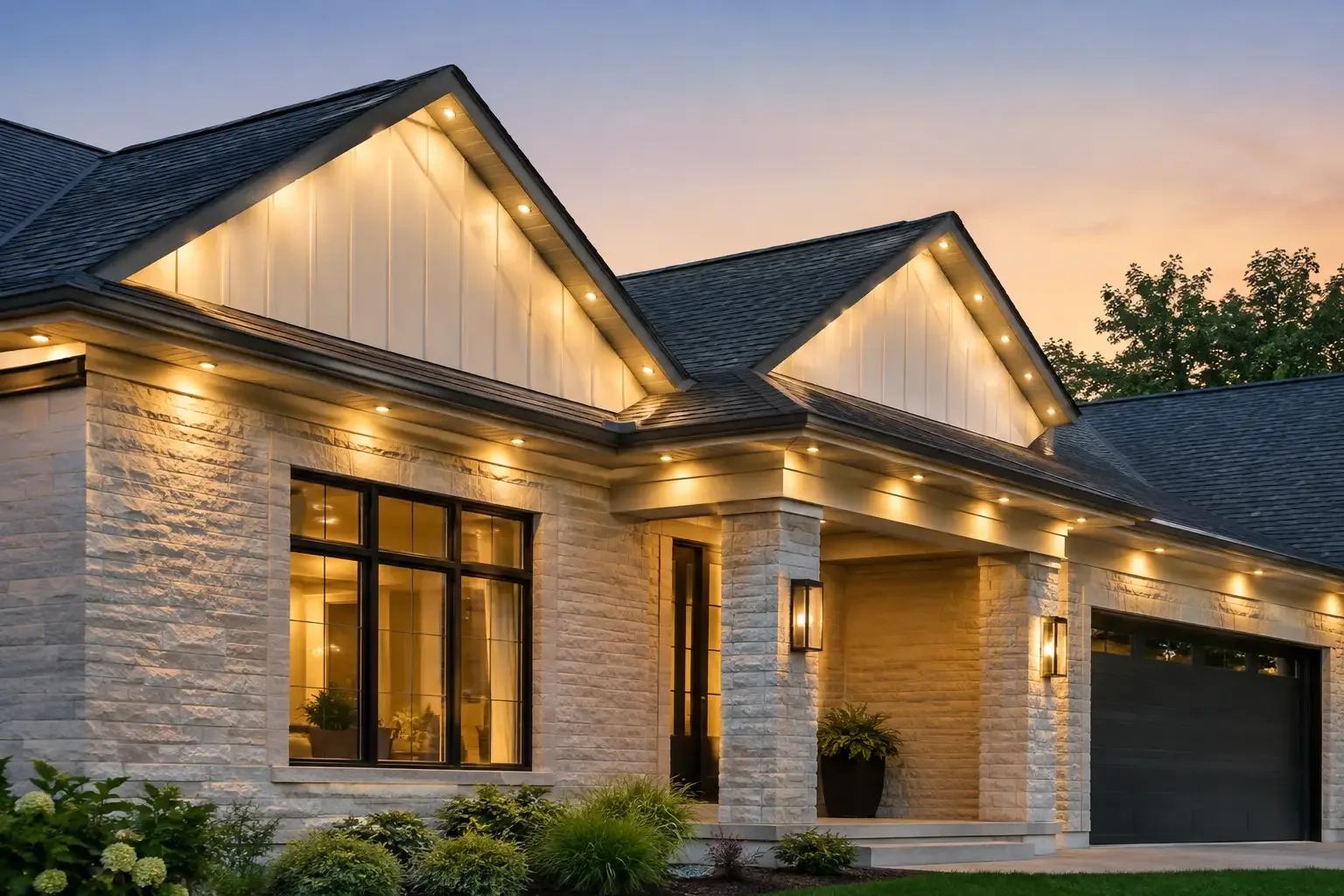
A home can look finished at night without looking decorated. That is the appeal of warm white roofline lighting: a soft, architectural glow that follows the lines you already love about your home. It adds presence after sunset, welcomes guests with a polished first impression, and leaves the roofline clean and understated during the day.
For homeowners across Denver and the Colorado Front Range, that everyday refinement matters just as much as holiday color. The right permanent system gives you both. Warm white becomes the setting you use most often, while full-color scenes remain ready for Christmas, Halloween, game days, birthdays, and the nights worth celebrating.
Why Warm White Roofline Lighting Feels Different
Warm white has a lower, more inviting color temperature than the cool white often associated with commercial signage or stark security fixtures. Rather than casting a blue-toned glare, it creates a golden-white light that complements brick, stone, stucco, siding, and natural wood details.
The effect should feel intentional, not overpowering. From the street, the lights define the eaves, peaks, gables, and garage roofline in a way that makes the home feel composed after dark. They are visible enough to create curb appeal, but restrained enough for a typical weeknight.
That balance is why fixture placement matters. A permanent lighting system is not simply a strand of bulbs attached to the fascia. It is a planned architectural detail. The track, light spacing, controller location, and wire paths all affect whether the finished home looks refined or improvised.
The Clean-by-Day Standard
Many homeowners like the idea of permanent lighting but hesitate over one practical question: what will it look like in daylight?
A thoughtfully installed system is designed to sit discreetly along the roofline and trim. The goal is for the track to blend with the home, with wiring routed and secured out of sight wherever the property allows. When the lights are off, the roofline should still look like your roofline, not like it is waiting for December.
Every house calls for a different plan. A broad front gable may be the visual focal point, while a lower garage line may need lighting to balance the facade. On some homes, wrapping the visible front elevations delivers the strongest result. On others, side returns or a patio-facing roofline are worth including because they are highly visible from outdoor living spaces.
This is also where a photo-based visualizer and an on-site evaluation are useful. Seeing warm white placement on an image of your own home makes it easier to decide which lines deserve attention before installation begins.
Warm White Is Not One Fixed Look
The best warm white setting depends on your home, your street, and your preference. Brightness that looks elegant on a large two-story property may feel too strong on a compact bungalow. Dark stone or deeply shaded exterior finishes can support a little more output, while light-colored siding may need a gentler setting to avoid visual glare.
App control makes this adjustment simple. You can set a lower brightness for ordinary evenings, raise it slightly for guests, or schedule the lights to turn off before bed. If your system includes zones, you can also treat different sections of the roofline independently. For example, the front elevation can carry the nightly warm white scene while a backyard zone stays off until you are using the patio.
Everyday Curb Appeal Without Seasonal Work
Temporary holiday lights solve a short-term problem. They also create an annual cycle of climbing ladders, checking failed strands, managing extension cords, and finding storage space once the season ends. Warm white permanent lighting changes the equation because the system is part of the home rather than a temporary project.
You are not limited to a few weeks of use. A warm white scene can become part of your nightly routine, whether you want the house to feel welcoming when you pull into the driveway or want a little more definition on a dark winter evening. In Colorado, where early sunsets can arrive well before dinner, that extra exterior warmth has a real presence.
It is not the same as floodlighting a facade. Floodlights serve a functional purpose, but they can flatten architectural detail and create harsh pools of brightness. Roofline lighting draws a clean outline instead. It works with the structure rather than competing with it.
Color When You Want It, Warm White When You Don’t
A permanent full-color system should not force a home into celebration mode every night. The value is having options without needing separate equipment.
Warm white can remain your default scene through most of the year. Then, when the calendar changes, you can switch to red and green for Christmas, orange and purple for Halloween, red, white, and blue for patriotic holidays, or team colors for a watch party. A birthday or graduation can get its own look in seconds.
The trade-off is worth understanding: animated effects and high-saturation colors naturally draw more attention than a steady warm white setting. That is ideal for a celebration, but not always for nightly use or a quiet neighborhood street. A well-designed app gives you the flexibility to match the scene to the moment, including static colors, brightness adjustments, timers, and schedules.
For many homeowners, that versatility is the reason to choose a color-capable permanent system even if their primary goal is architectural warm white. You invest in the polished look you want every evening, while keeping the option to make the house memorable when the occasion calls for it.
What Professional Planning Changes
The most visible part of roofline lighting is the glow. The work that makes it look clean happens before the first light turns on.
A professional plan considers roofline geometry, trim material, power access, controller placement, and the most discreet route for wiring. It also considers the views that matter most: the approach from the street, the driveway, the front walk, and any outdoor spaces where you spend time after dark.
Installation quality affects long-term confidence as well. Tracks should follow the roofline neatly. Connections and wire runs should be handled with care. The controller should be placed where it is practical to access, protected appropriately, and able to support the planned layout. Once the system is installed, homeowners should understand how to use it rather than being handed an app and left to guess.
At Firefly Exterior Lighting, that process includes planning the lines, installing the system, connecting controls, and walking homeowners through scenes, zones, brightness, timers, and schedules. The finished result should feel easy to live with from the first evening onward.
Choosing the Right Warm White Setting
Start with the purpose of the lighting. If your priority is subtle nightly curb appeal, choose a steady warm white scene at a moderate brightness and schedule it around sunset. If your home sits farther back from the street or has a more complex roofline, a slightly brighter setting may give the architecture the definition it needs.
Then consider how often you want the house illuminated. Some homeowners prefer warm white every night. Others reserve it for weekends, entertaining, and the darker months. There is no single correct schedule. The advantage of a permanent, app-controlled system is that your lighting can follow your routine instead of adding another task to it.
A great roofline lighting plan does not ask your home to become something it is not. It simply gives its best lines a reason to be seen after sunset.